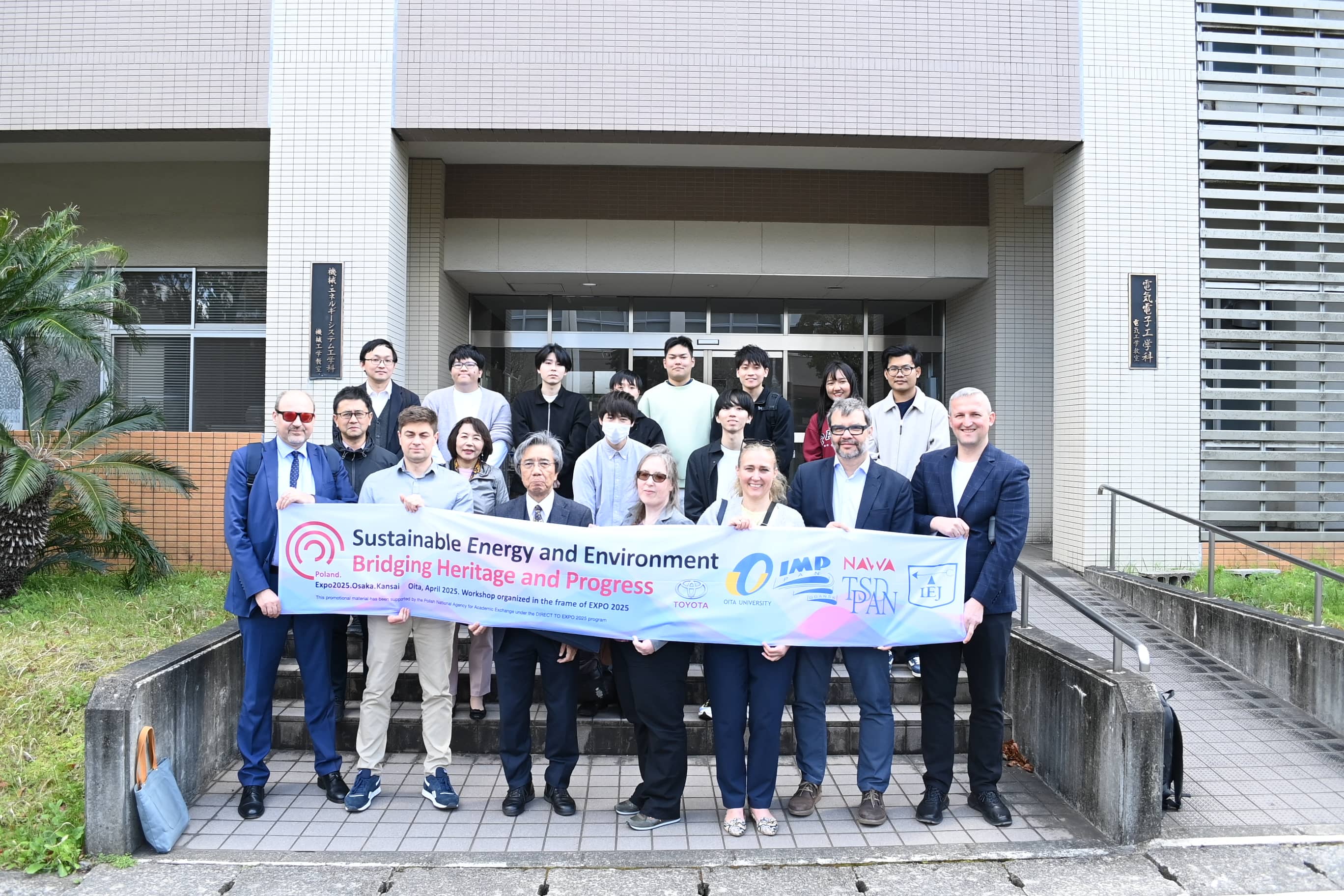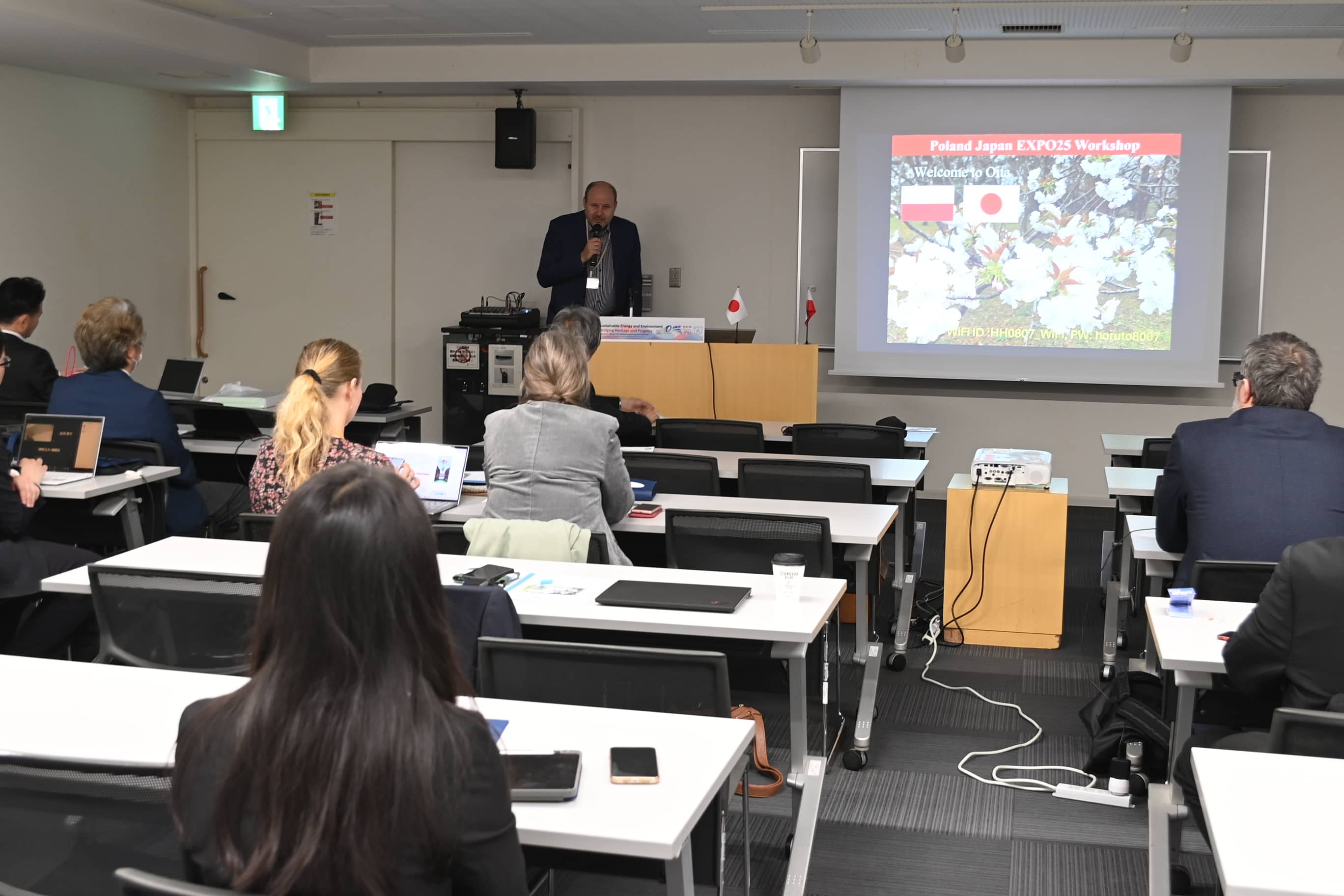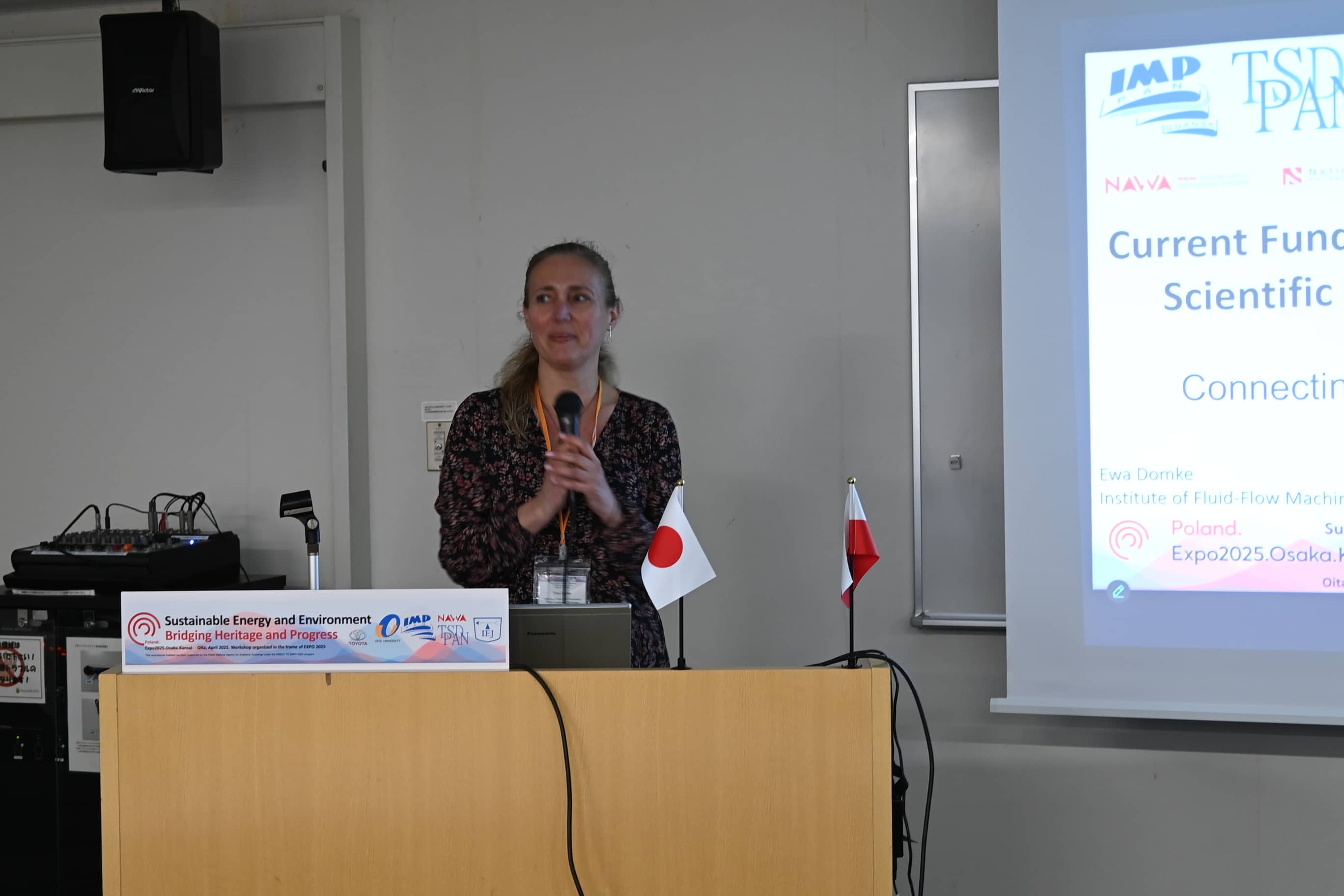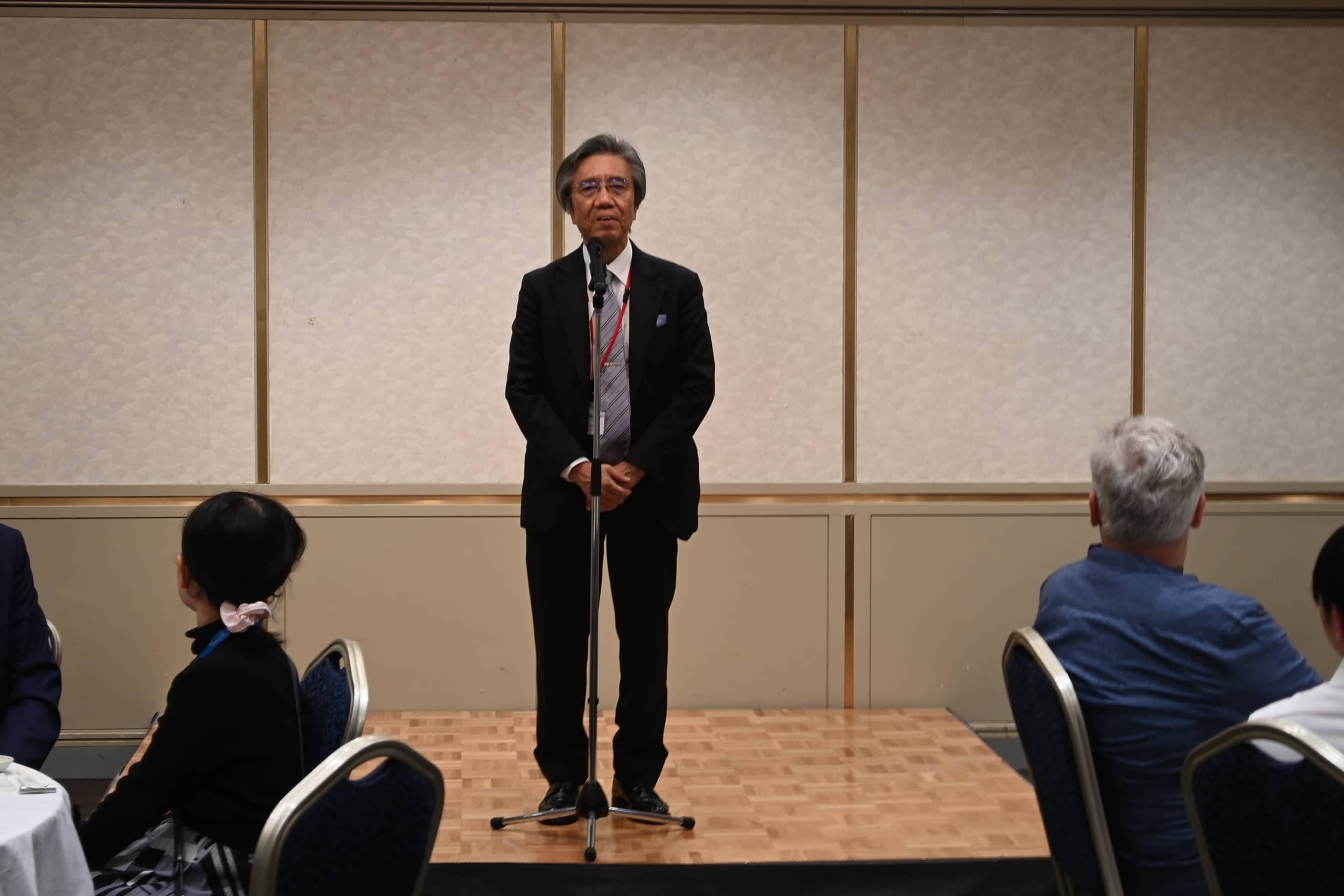

In days 15-25 April 2025. delegation of Robert Szewalski Institute of Flow Machines PAS (IMP PAS) visited Japan, participating in Poland-Japan EXPO25 Workshop and Technical Tour. The event took place in Oita, Kumamoto and Osaka as part of the programme DIRECT TO EXPO 2025 financed by National Agency for Academic Exchange (NAWA)and his host was Oita University.
Workshops under the heading "Sustainable Energy and Environment: Bridging Heritage and Progress", brought together representatives of the world of science, young researchers and students from both countries. Their goal was to strengthen Polish-Japanese cooperation, promote research IMP PAN and present opportunities Tricity Doctoral School PAS (TSD PAN).
A Rich Content Programme
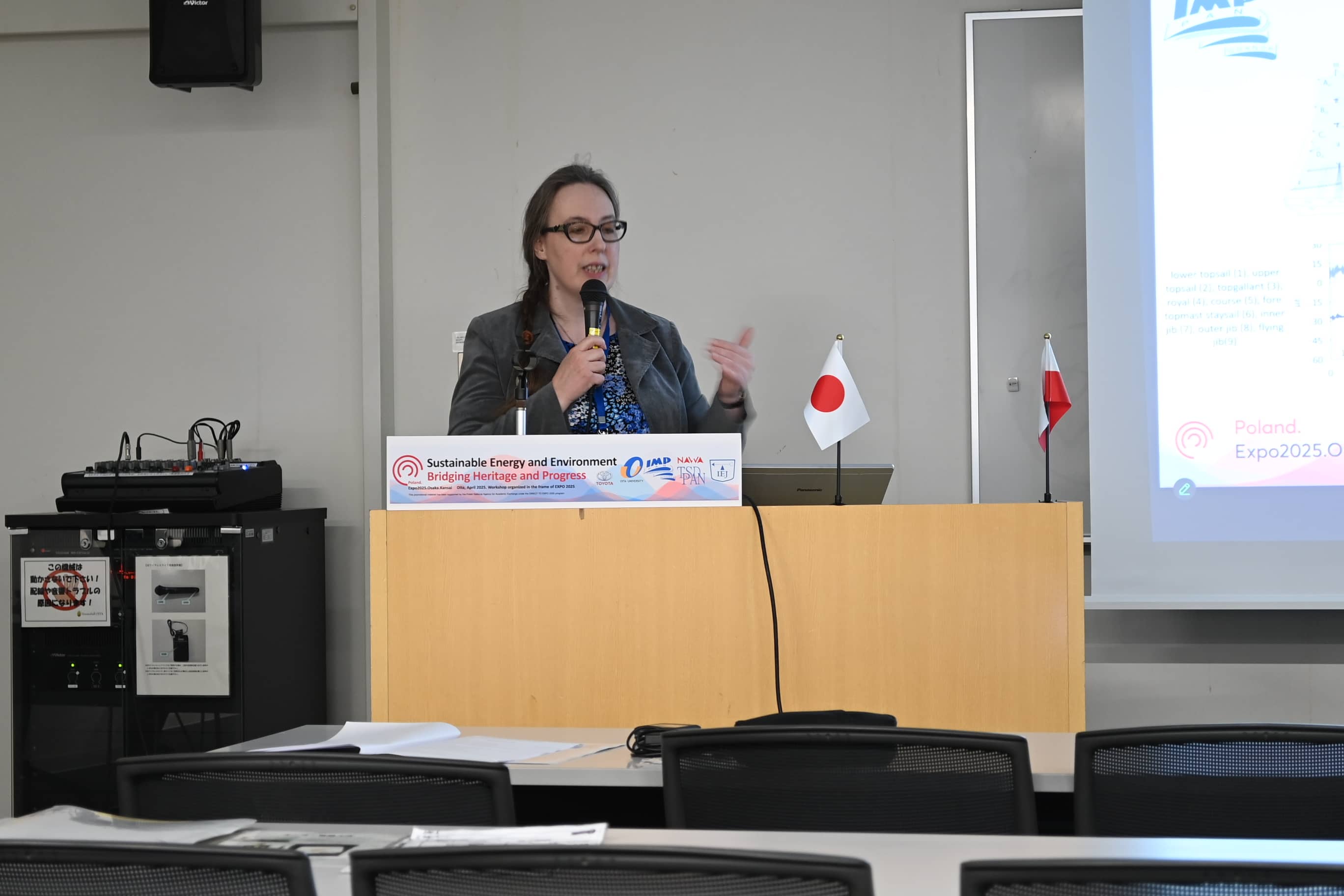
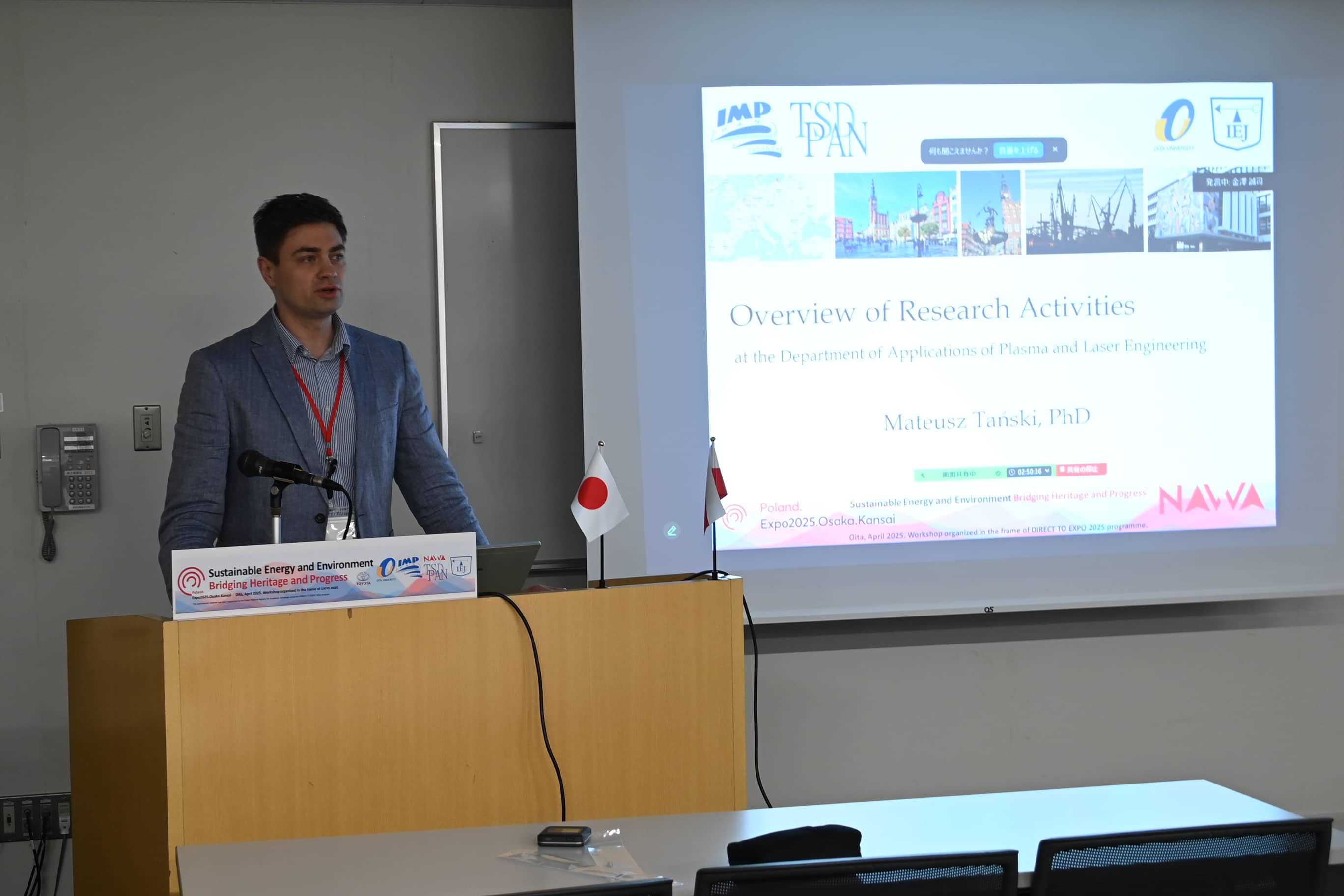
During a two-day meeting at Oita Hall, 11 speeches by Polish and Japanese speakersincluding:
- Dr. Magdalena Mieloszyk (IMP PAN) – inaugural lecture on systems Structural Health Monitoring for composite materials,
- Dr Marek Kocik (IMP PAN) – presentation of the Institute’s research potential,
- Dr. Mateusz Tanski (IMP PAN) – review of research on plasma applications and laser technologies,
- Ewa Domke (IMP PAN) – a review of the possibilities of financing Polish-Japanese cooperation and exchange of doctoral students.
The presentation was of great interest Tricity Doctoral School PASpresented by Dr. Magdalena Mieloszyk. The offer of interdisciplinary research and international mobility programs met with a lively response from Japanese students.
Parallel Thematic discussions in groups, dedicated to, among others:
- the future of technologies presented at EXPO 2025,
- global energy and environmental challenges,
- promotion of Poland and Japan as attractive places for students and researchers.
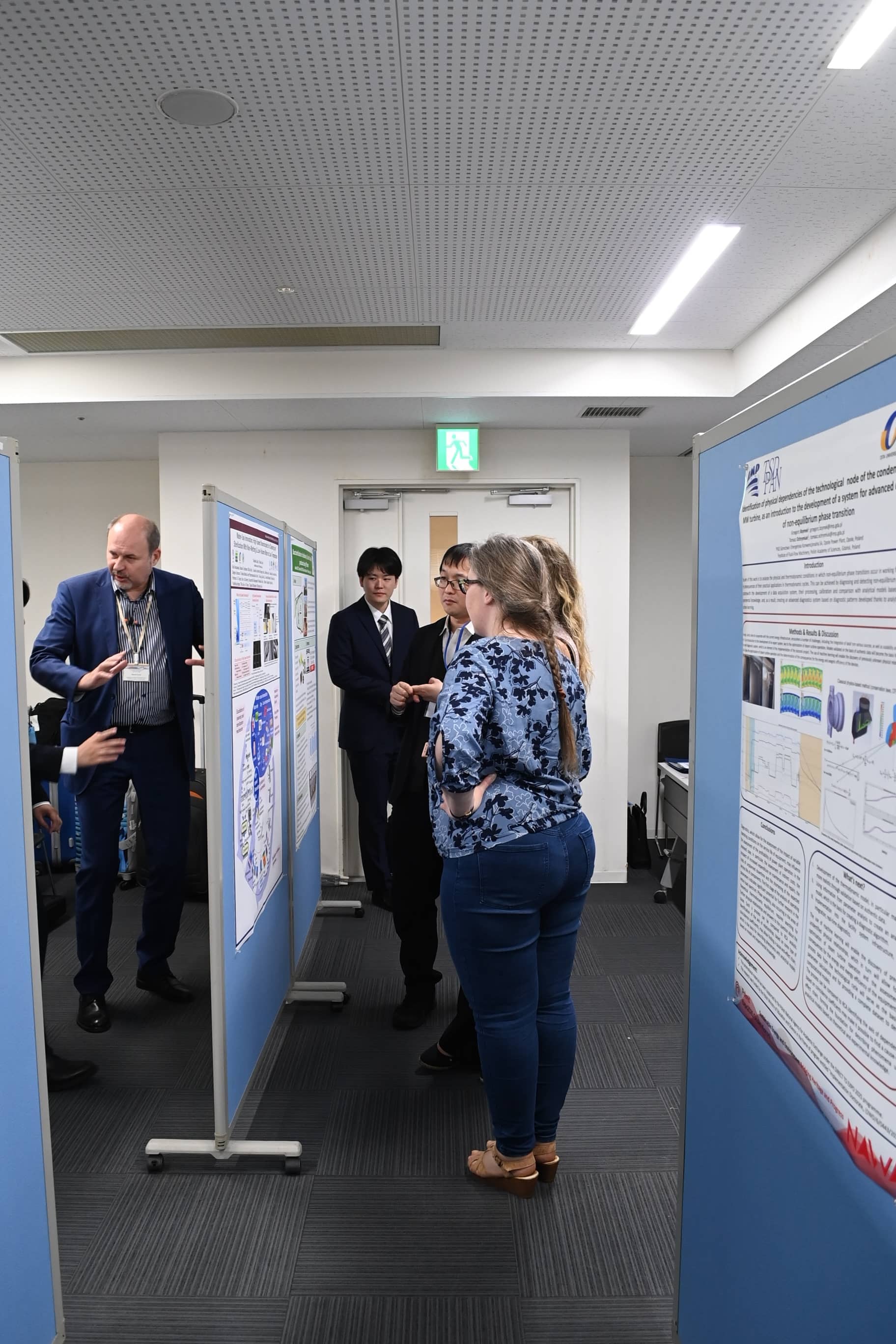
Not missing either post session – presented 23 Posters prepared by young researchers from both countries, including PhD students from TSD PAS.
Participation of young scientists
The PAN IMP delegation was reinforced with the presence of posters of PhD students who presented the results of their research work. Among the topics included:
- Development 3D printed composites reinforced with filaments,
- innovative methods of monitoring bone healing processes using ultrasound,
- Research hydrogen brittle materials and their impact on the durability of the structure,
- use of fibre optic sensors to monitor the state of marine structures.
Thanks to this, Polish PhD students had the opportunity to present their work at an international forum, to pass on experiences and invitation to discuss with their peers from Japan.
Culture and integration
The meeting was also inclusive and cultural. During gala in Art Hotel Oita Polish delegation was able to learn about traditional Japanese cuisine and in an informal atmosphere continue the discussions initiated during scientific sessions.
An important element of the visit was also technical and local tour, including:
- visit to the region Coconoe in Oita Prefecture,
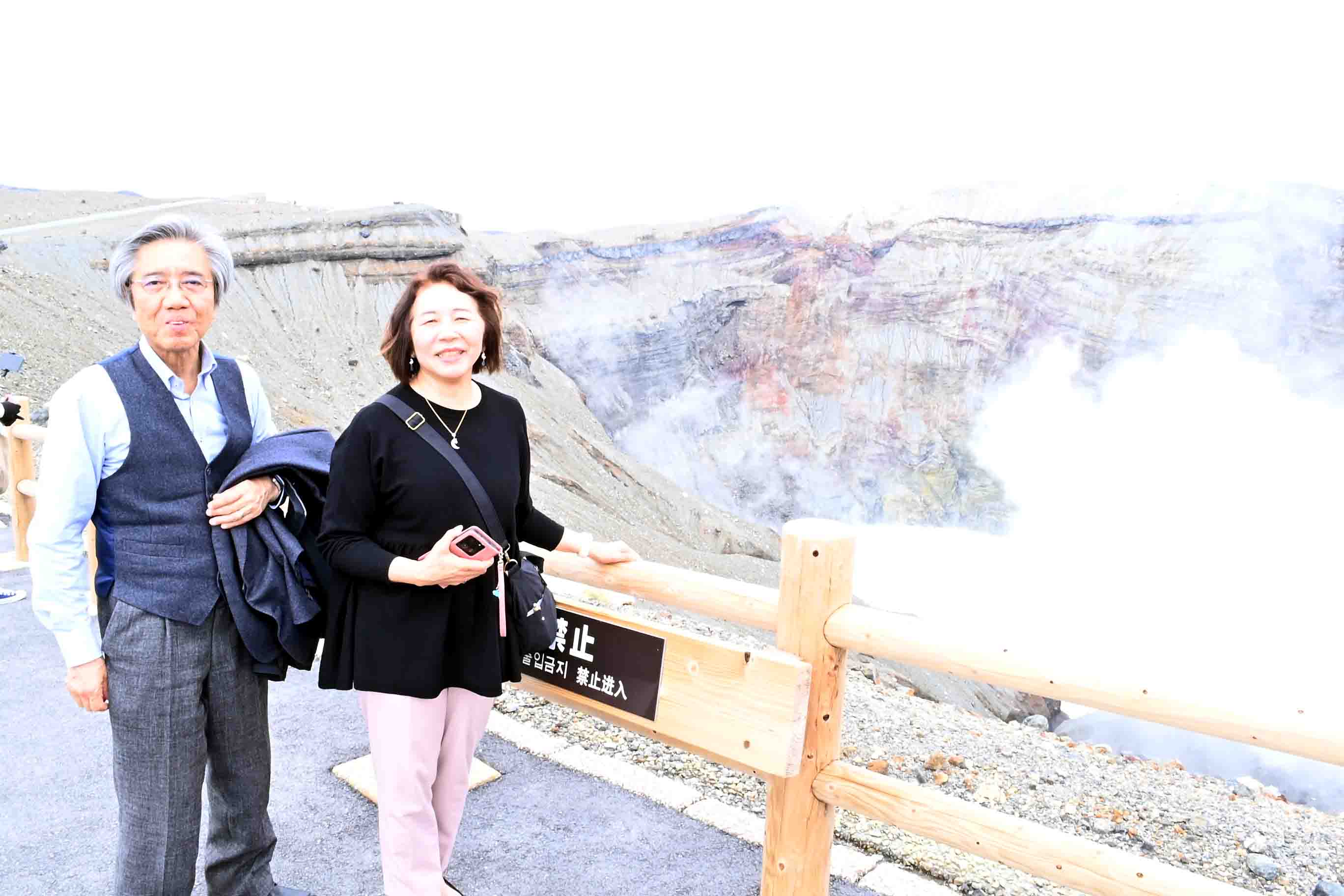
- volcano tour Aso in Kumamoto Prefecture,
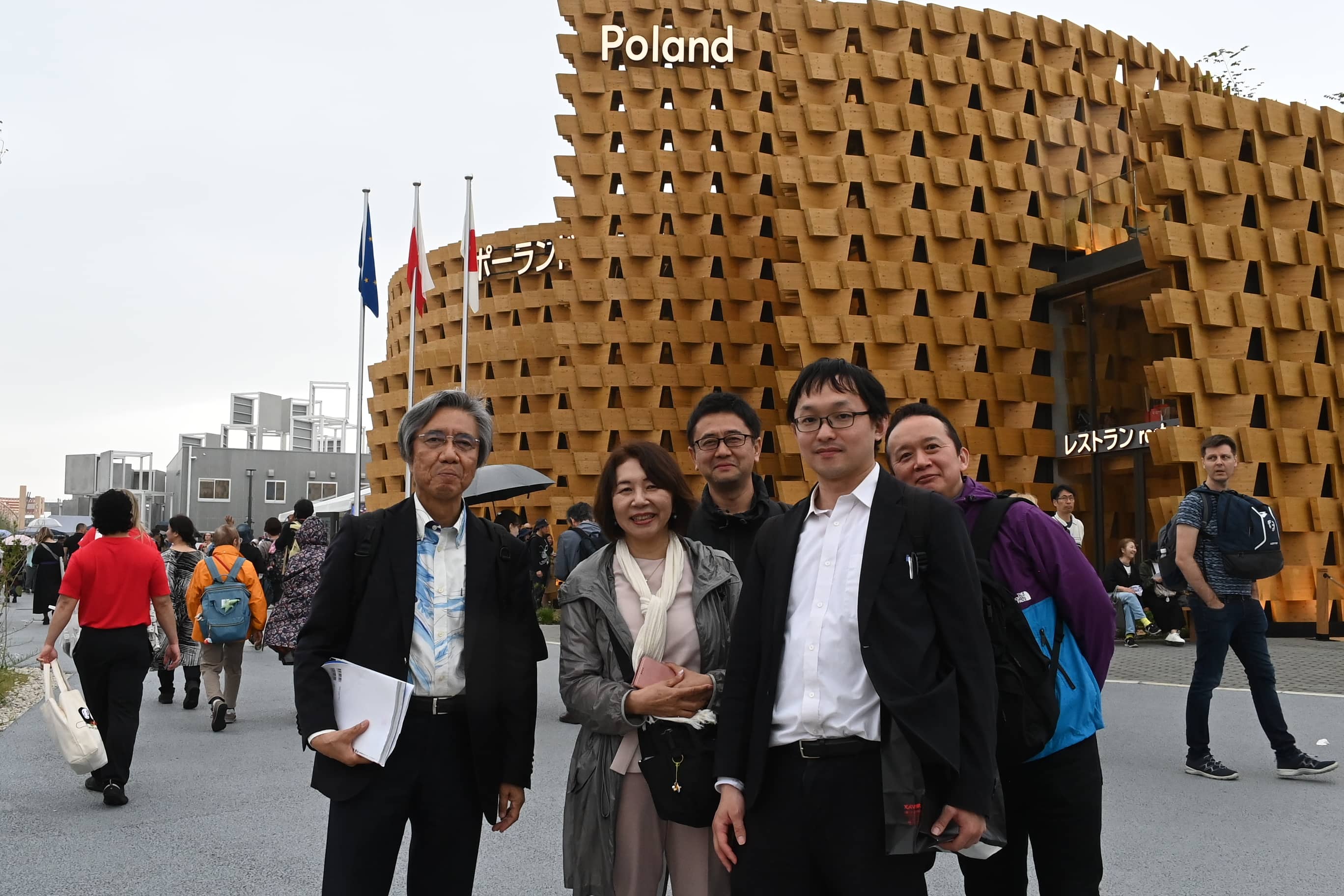
- meeting in Polish Pavilion at EXPO 2025 in Osaka, where the delegation of IMP PAS presented its achievements and established contacts with representatives of other scientific institutions.
Importance of further cooperation
Workshops in Oita were the next stage of over twenty years of cooperation between IMP PAN and universities and institutes in Japan. The meeting allowed to define new areas of common research – from hydrogen technologies to material diagnostics to intelligent energy systems.
With support NAWA and engagement of Japanese partners, the event became a platform for developing new projects, as well as an opportunity to promote Poland as an attractive place to conduct research and doctoral studies.
Summary
The IMP delegation of the Polish Academy of Sciences in Japan not only presented the achievements of the Institute and PhD students, but also strengthened relations with partners from the Land of Blooming Cherry. The event confirmed that Polish-Japanese cooperation in the area of sustainable energy and innovative technologies has great potential and can contribute to addressing global challenges.
Workshops and study visit showed how important the synergy of science, culture and exchange of young generations of researchers is – they will shape the future of Polish-Japanese cooperation in the coming decades.