Elemental Analysis
Research using the non-invasive XRF technique of the collection of alabasters from the collections of European museums | National Museum in Gdańsk |
Tests of laser cleaning effects of sandstone facade elements: Warsaw - Łazienki - Palace on the Water | “Restauro” Sp. z o.o., Toruń |
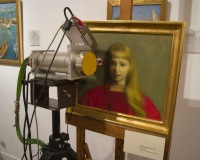
Research with X-ray fluorescence (XRF) techniques of Czechowicz's drawings and paintings at the National Museum in Warsaw | private maintenance |
Non-contact analytical studies of J. Pankiewicz's paintings at the National Museum in Krakow, the Silesian Museum in Katowice and the National Museum in Poznań | Nicolaus Copernicus University in Toruń |
Studies of samples of the painting layer taken from J. Pankiewicz's paintings | Nicolaus Copernicus University in Toruń |
Research on stone layers of St. John's Cathedral in Toruń | RESTAURO, Toruń |
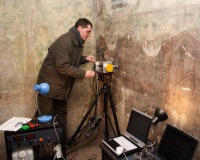
Non-destructive analysis of miniatures from Heinrich von Hesler's "Apocalypse of St John" | UMK Library in Toruń |
Research of non-destructive malaria on the historic bisquick tone - research using XRF technology | Nicolaus Copernicus University in Toruń |
Tests on the composition of the elemental metal buckle from the ship wreck "General Carleton" made by XRF method | Central Maritime Museum in Gdańsk |
Analysis of monuments (including coin collection) from archaeological research in Łekno, Wągrowiec, Wielkopolskie voivodship (as of Ł3, Ł4 and Ł5) - method of spectroscopy of X-ray fluorescence | Adam Mickiewicz University in Poznań |
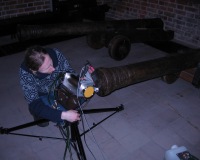
Analysis of the alloy composition of cannon barrels from W-6 "Solen" wreck | Central Maritime Museum in Gdańsk |
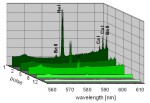
Spectrographic studies of historical objects made of metal alloys | Archaeological Museum |
Research in XRF technology of a group of medieval wooden figures, polychrome, depicting 11 apostles | National Museum in Gdańsk |
XRF spectrometer analysis of the composition of the Amalgamum skull seal from W-32 wreck | Central Maritime Museum in Gdańsk |